Brian De Palma’s Casualties of War explores the moral collapse of soldiers in Vietnam through a harrowing true story of violence, silence, and conscience.

Of all the wars that have ever been shown on camera, the Vietnam War is often the one that provokes the most reactions by virtue of its violence and futility. Since the end of the conflict in 1975, every decade has seen a Vietnam war film by an American filmmaker – all of them, but particularly the second half of the 1980s. Where the most talented filmmakers took up this delicate subject, so close to the hearts of Americans, among them Brian de Palma.
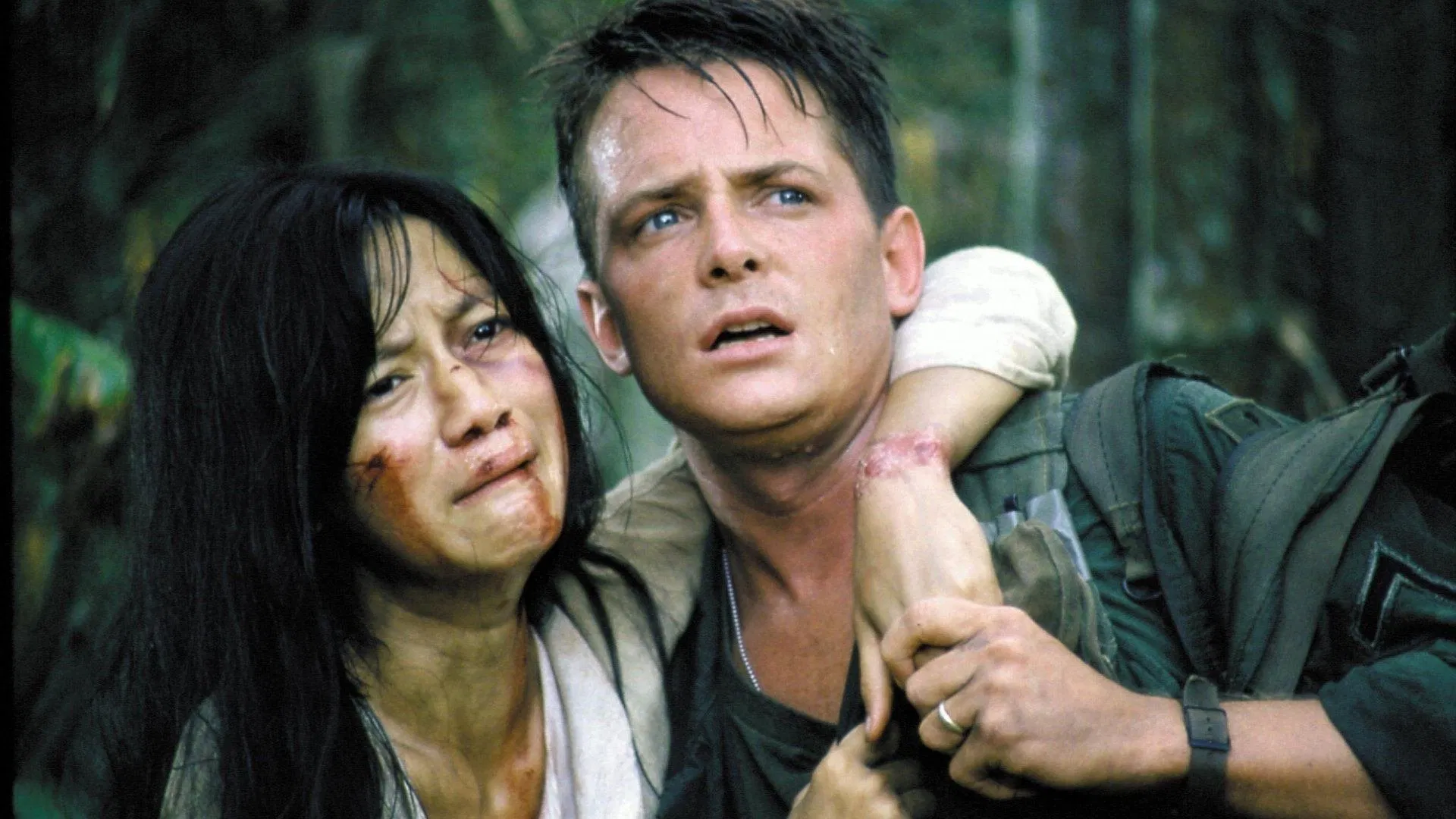
Based on Daniel Lang’s 1969 New Yorker article about an incident in 1966, Casulaties of War centers on a squad of American soldiers who, during a mission, kidnapped, raped and murdered a Vietnamese girl, Oahn. Of the five soldiers, Sergeant Meserve (Sean Penn), Clark (Don Harvey), Hatcher (John C. Reilley), Diaz (John Leguizamo) and Ericksson (Michael J. Fox), only the latter refused to take part in the rape and, following the girl’s murder, testified against his comrades to put them on trial.

Although the director wanted to adapt the project as early as 1969 after reading Lang’s article, it would take another twenty years for the film to see the light of day, during which time the script adopted a first draft in 79, before being taken up again by De Palma, fresh from the critical and public success of The Untouchables in 1987. For the filmmaker, the story of Casulaties of War perfectly represents the United States’ involvement in Vietnam, and underscores the destruction of a country and a people in the process.[1]
Throughout the film, we follow events through the eyes of Eriksson, who arrived in Vietnam “only” three weeks ago, and is immediately categorized as the new guy, the rookie, the one who must be taught how this war is and must be fought. This point of view quickly allows the film to show us the social pressure exerted on soldiers, the need to be part of the group, to be accepted, even if the actions we perpetuate are immoral or contrary to our values. Ericksson, who at the beginning of the film submits to very paternalistic treatment from Meserve and Clark, soon hardens to remain faithful to what he believes to be right. By contrast, Diaz, also new to the squad, gives in to this social pressure to perform actions for which he will express remorse.

Because at the heart of the film is the theme of choice, of the dilemma faced by soldiers in participating, intervening and bearing witness to incidents like this. For the answer is not so obvious. When Ericksson stands his ground by refusing to rape the Vietnamese girl, the possibility of his being killed or abused by his own comrades becomes a possibility, surrounding him at the foot of a tree while Meserve threatens Ericksson with rape when his turn with the girl is done. And despite the fact that Ericksson doesn’t take part in the rape and goes off to stand guard elsewhere, does this still purge him of the guilt of belonging to the group, or even of his inability to protect the girl? After all, as Ericksson himself says, “We’re supposed to help these people”. The sense of morality then becomes crucial, of what we would do if we were in Ericksson’s shoes. And by focusing on this horrific incident and the involvement of several soldiers, de Palma is interested in those moments when our actions and their consequences can no longer be excused by war. They are our actions.
In the most psychologically brutal way, Casualties of War questions the very point of US intervention in Vietnam, as well as the war’s multi-faceted trauma. That of Vietnam and its people, brutalized and destroyed by their own “protector”, that of soldiers like Ericksson faced with the physical, moral and sexual violence of this war and their inability to express themselves openly about what they have seen. And also that of the United States, of the citizens who see these images or these accounts on television or in newspapers such as the New Yorker in 1969 during the war, or in a cinema more than a decade after the events, upset by a vision and actions of their country, completely in conflict with what they thought they represented in the eyes of the world. Ericksson’s inability to confront and stop the physical and sexual violence inflicted on young Oahn could just as well represent the helplessness of the anti-war protests and movements of the 1960s and 1970s. For De Palma, the Vietnam War is like a wound from which America has never recovered.

Rather than physical violence through bloody battle scenes, Casualties of War approaches violence in what we don’t see, or what we see afterwards. As Ericksson observes when he discovers Oahn’s face, swollen and bruised after his abuse, and only able to say “I’m sorry”. Sean Penn and Don Harvey brilliantly personify the influence of war on the mind, breaking it as the days in the field pile up. On the other hand, de Palma’s choice of Michael J. Fox is quite revealing of his intentions, bringing the perfect, handsome American boy from Back to the Future face to face with the horrors of war. If the latter film represents an America of the past so dreamt of by some, Casualties of War shows the darker underside of this America.
On its release, and despite its critical success, the film was the subject of controversy, particularly on the part of Vietnam veterans’ memorial organizations. They deplored the film’s portrayal of soldiers as incompetent, unnecessarily violent and, more broadly, at odds with reality, such as John Weeler, one of the chairmen of the Vietnam Memorial: “Every dollar spent to see this film is a knife in the heart of some vet” [2], and regretted that the majority of soldiers who had built hospitals, schools and orphanages were not shown. But while the film doesn’t please these organizations by showing fundamentally deranged soldiers, the two discourses can co-exist, and showing Sergeant Meserve impassive in the face of violence doesn’t make the good deeds invalid. To omit Ericksson’s testimony would be a knife in the the hearts of some Vietnamese.
[1] Lawrence H. Suid, Guts and Glory: The Making of the American Military Image in Film, p. 544.
[2] Daily Variety, August 24 1989.

Leave a Reply