For its visceral violence and comedy, John Landis’ An American Werewolf in London clearly deserve a second chance.

The horror genre is sometimes quite restrictive: either they’re scary or they’re not, they’re comedies or they’re horror films. The balance between the two genres is sometimes difficult to find and, above all, to appeal to the general public, even if the number of films of this kind has increased over the last twenty years. John Landis had trouble getting his American Werewolf in London financed because of this in 1981.
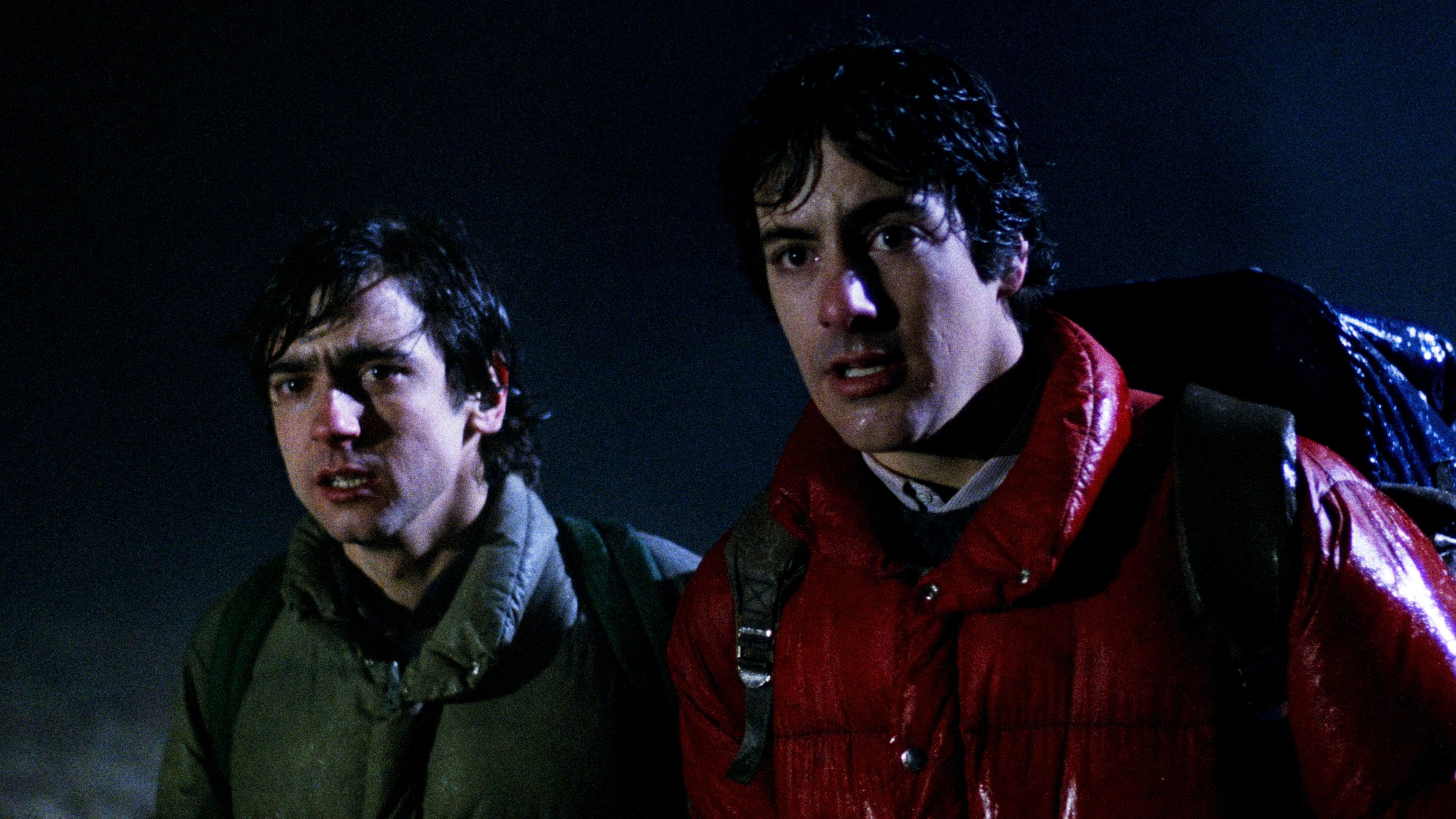
Landis’s approach to writing the film is quite special, very direct and at the same time quite infantile. The introduction of the two young boys, David Kessler (David Naughton) and Jack Goodman (Griffin Dunne), takes place in a desolate English countryside, while the two backpackers cross fields chatting. Landis is a sneaky one; he knows that with a pleasantly light introduction to the two boys, we’re in for a horror movie that’s probably a bit silly, but fun. But once the full moon clears, the film shows all its brutal violence when the two youngsters are attacked. There’s an agonizing brutality to the way Jack is torn limb from limb by the werewolf, as he screams for help.
“My intention was that the violence sould be very realistic, [talking about jack’s death] I wanted to be as real and horrific as possible [laugh] it’s extremely unpleasant”[1]
It’s precisely this violence that unsettled critics and audiences alike, when it’s followed by occasionally comical sequences in the hospital, all wrapped up in the crisp, bright light typical of comedy. An American Werewolf in London and its filmmaker play on this strange subtlety to invite horror into David’s daily life. Having survived the attack, he receives visits from Jack – in phenomenally realistic make-up – telling him repeatedly that he’ll turn into a werewolf on the next full moon if he doesn’t kill himself.

And his transformation he will get. An absolutely breathtaking sequence in which Landis shows every possible twist and turn of David’s body, hands, face and hair. Again, there’s a visceral brutality in the way the filmmaker shows us this poor man screaming in pain from this transformation, while we hear his bones and limbs dislocate. Rick Baker, in charge of special effects, won an Oscar for best make-up for this film, and inspired countless artists to push on-screen transformations ever further, including Michael Jackson, who hired Landis and Baker for the Thriller music video in 1983.
Although An American Werewolf in London tells a fairly straightforward story in its structure, Landis manages to insert several commentaries on British society under Thatcher’s anti-foreign rule (all the more true after the Brexit), as well as on puberty and the changes that take place in our bodies and intimately with others.
When it comes to 80s horror films, An American Werewolf clearly deserves a second chance, even if it has acquired a little cult status among horror aficionados. At least for its transformations and the insidiousness of its horror/comedy scenes.
An American Werewolf in London Original Trailer
[1] Interview with director John Landis on his film “An American Werewolf in London” (1981), URL : https://www.youtube.com/watch?v=gnWnbWz4uIY

Leave a Reply